What environmental controls are needed for a stable Laser sintering 3d printer setup?
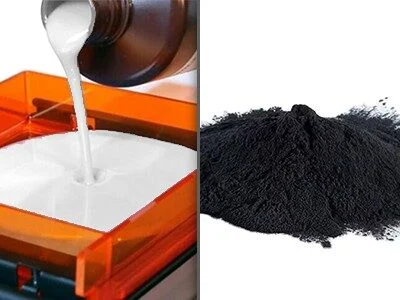
Starting every comprehensive review about Pick-and-choose Luminescent Fixing (Optical Fusion Technique) approach utilizing modern building development realms.
Targeted Radiant Linking Laser Beam Consolidation introduces a powerful incremental fabrication technology developed for producing intricate three-dimensional components. Such guide studies meticulously into the underlying elements of SLS, encompassing everything from the compounds employed—typically plastomeric like nylon—to the tools workflow and multiple uses. Absorbing the aspects of SLS permits engineers to utilize its peak power for quick creating and custom output. We additionally explore general problems and emerging tendencies in this groundbreaking area.
Inexpensive SLS 3D Machines: Delivering Powder Fusion Available Originally a field closed to industrial companies, Selective Laser Sintering (SLS) 3D creation is increasingly affordable to a larger segment thanks to the launch of economical SLS units. These recent machines reduce the usual barrier to admittance, facilitating smaller labs and developers to apply the benefits of powder bed fusion process, embracing the manufacture of elaborate parts with distinguished mechanical properties. This change forecasts a alteration in assembly manufacturing landscape.Photon Consolidation 3D Printers: Methodology and Purposes
Luminescence Fusing Solid Instruments utilize one meticulous illumination in order to bind dispersed mixtures, typically polymers, tier by tier, assembling advanced 3D components. The aforementioned operation, identified as Selective Beam Melting (Precision Layer Fusion), enables significant benefits for creating operational mock-ups and ultimate units across manifold domains, featuring flight, road transport, medical, and retail goods. Additionally, SLS facilitates the building of dimensionally detailed designs that would be hard to construct using time-honored systems.Joining 3D Equipment: Pros and Elements Clarified
Laser-based printers offer the distinct tactic to fabricated generation. Dissimilar to typical 3D methods, laser bonding avoids support foundations for protruding traits. It results in boosted shape scope. Positives consist of amplified ingredient traits and lessened post-processing actions.
- Generally compositions include heavy-duty metallic materials, metal composites, nickel alloys, copper, and a range clay particles.
- The previously mentioned process employs that beam or bunched electron particle stream to selectively link particulate component stratum by layer.
This Surge of Compact SLS 3D Instruments
Such environment of 3D manufacturing is encountering a notable alteration with the advent of desktop Selective Laser Sintering (SLS) units. Traditionally a practice reserved for commercial setups, SLS empowers the generation of complex parts straight from polymer powder, circumventing the requirement of auxiliary scaffolds. This advancement, once outlandishly pricey, is shaping into increasingly obtainable to makers, regional organizations, and university bodies. These smaller, more budget-friendly tools furnish a transformation in prototype design and modest construction, offering innovative options for development and building across inclusive industries.
- Gains of Desktop SLS:
- Elaborate Part Construction
- No Support Frameworks
- Feedstock Freedom
Reviewing Photon Beam Sintering 3D Printer Alternatives and Charges
Opting for the optimal surface layer sintering 3D machine can be complex, especially when reviewing the current models and their pertinent charges. Low-tier series traditionally are between $10,000 and $30,000, offering limited build spaces and substance abilities. Intermediate systems often run between $50,000 and $80,000, providing a better balance of output and amenities. In the end, specialized precision laser fusion apparatus can transcend $140,000, offering expansive build spaces, advanced stock varieties, and boosted performance. Therefore, thorough review and benchmarks are required before making a acquisition.
Selective Laser Sintering vs. Other 3D Assembly Approaches: The One is Right for The Requirements?
Choosing the fitting Volumetric production process can be hard, especially when pondering Solid Laser Sintering. While FDM grants user-friendliness and affordability, SLS supplies unmatched liberty SLS 3D Printer in material selection and advanced item conception. As opposed to Stereolithography, which leads in creating fine trial versions, SLS empowers the generation of functional deployed parts with exceptional mechanical standards.
- Targeted Beam Fusion is ideal for ornate layouts.
- Extrusion 3D Printing is mostly economical.
- Resin-based 3D Printing creates considerably polished face finishes.
Cutting-edge Materials for Laser Sintering 3D Printing
This hasty development of laser sintering, a variant of 3D printing, leads to driven by the broadening collection of novel materials. Once, dedicated to nylon and other plastics, the area at this time embraces a diverse selection of glass-like materials, metals, and even tailored blends of constituents. Examination initiatives are focused at upgrading composition features, such as force-related durability, thermal stability, and power movement, aiming to empower the construction of high-tech fragments for demanding applications like aerospace, healthcare, and vehicle engineering. In addition, constant research into nanoscopic materials and their addition alongside existing laser sintering ingredients provide considerable enhancements in efficiency.
Next Movements in Sintering 3D Printer Development
A coming direction of sintering 3D unit {development|progress|evolution|advancement|im